Interlude Holiday Post Ranking Rankin/Bass Christmas Specials —> From Best to Less…
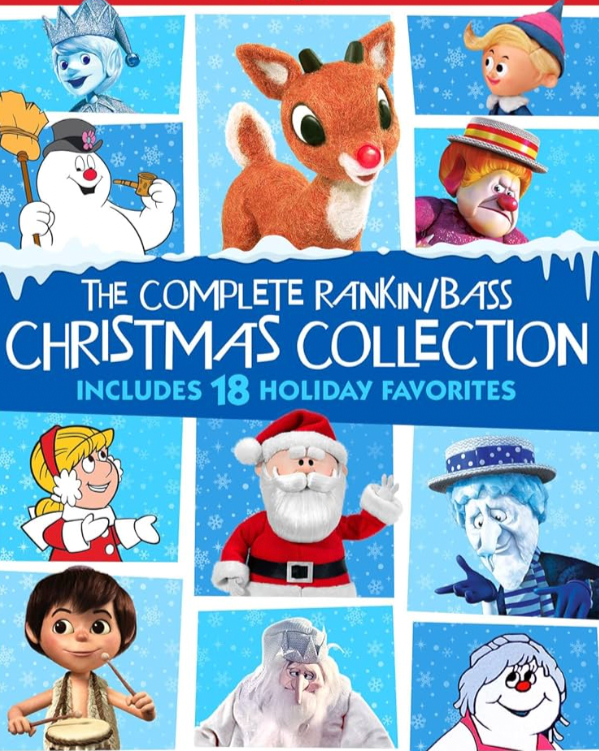
What do the Rankin/Bass Christmas specials and writing picture books have in common?
Making memorable stories for children.
Now in the holiday season, I would be remiss if I didn’t spend at least one afternoon binging the Rankin/Bass Christmas specials that I’ve been watching since I was small. For years, I would randomly catch these specials on ABC’s 25 Days of Christmas, or eagerly await to see them during their scheduled viewings on CBS.
While I’ve never been a fan of puppetry, Rankin/Bass Productions has been the exception. I found their whimsical world-building irresistible, as well as their campy, but charming storytelling. Their lovable characters and original songs have understandably become mainstays in the Christmas cannon.
It’s fun for me that my parents grew up with some of these specials. Over the years as my mom struggled with her love/hate relationship with 1964’s Rudolph the Red Nosed Reindeer, we’ve nevertheless made time to enjoy it together.
That’s the impact stories can offer to us from a young age. They dazzle, engage, and then stay put in our memories well into adulthood.
Rankin/Bass Productions told stories that continue to connect with us through the generations. They touched our hearts, and inspired a spirit of Christmastime.
It’s important to have stories that bring you back to the warm fuzziness of the holiday season. It’s the right kind of medicine we need for the soul.
In this post, I’m straying a bit from my all-things-picture-books blog to talk about another kind of childhood storytelling.
So, BUCKLE IN. Here is my list of ranked Rankin/Bass Christmas specials, from what I think is best to, well, less… And talking about story elements in between. :)
Also, sorry, I needed to post this and have not watched The Little Drummer Boy Book II. So that one will be missing from the list!
I’ll be listing this from Less to Best - With recs to either Watch or Skip. Scroll to the bottom to see what’s made the top of my list (and definitely a watch!).
—-
First, Some Technical Factoids for Those Interested…
From Rudolph the Red-Nosed Reindeer - on, Rankin/Bass became beloved names in television. This helped convince the likes of Fred Astaire, Angela Lansbury, Mickey Rooney, Jackie Vernon, among other Hollywood stars to sign on to their productions. Having movie stars in your animated roster was unusual at that time. Not even Disney did this until the early 1990s!
Arthur Rankin Jr. and Jules Bass established Rankin/Bass Productions in 1960. For over 30 years, the duo created 18 Christmas specials, both as stop motion and traditional cel animation features.
Many of the Rankin/Bass techniques in stop motion were innovative for their time. With the release of their first collaboration, The New Adventures of Pinocchio, Rankin and Bass created their Animagic style of stop motion.
Animagic utilized projections laid over their stop motion figures, and the stop motion was made using single frame stop motion.
Single frame stop motion: The painstaking process of moving your figure (or in this case, puppet) one frame at a time to shoot the film.
Rankin, Bass, and their recurring staff writer, Romeo Muller, built a plethora of worlds that persist throughout their specials. As well as the musical stylings of Maury Laws.
Rudolph the Red-Nosed Reindeer was released in 1964, and is not only their very first animagic Christmas special, it is the longest running Christmas special in history. Check out this great article from the Smithsonian to learn more.
—-
⬇️ Okay, Here Are the Rankings! ⬇️
17. Pinocchio’s Christmas (Skip)
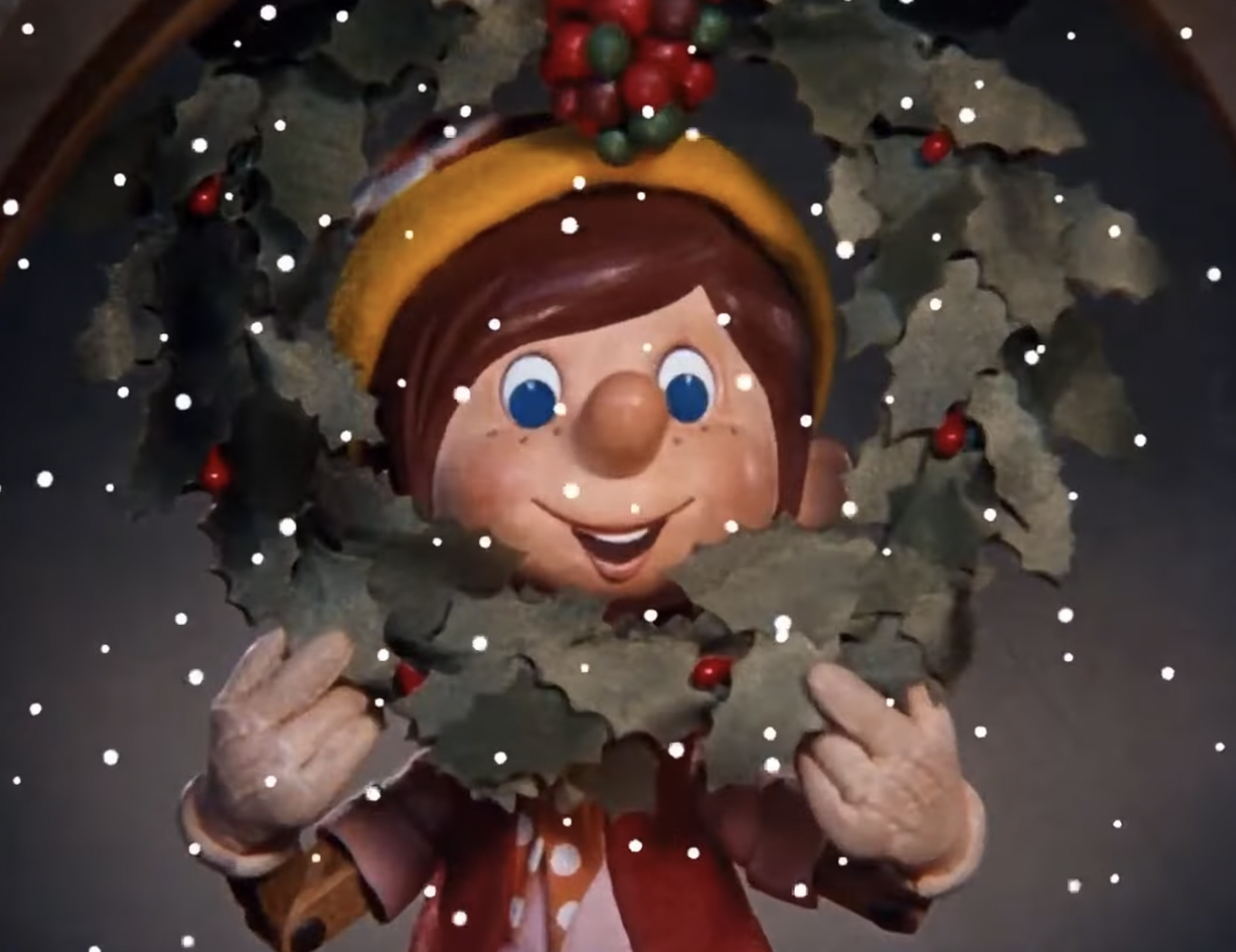
Frame from Pinocchio’s Christmas (1980). © Warner Bros. Entertainment Inc. Used for critical commentary.
With respect to Walt Disney’s 1940 Pinocchio and Guillermo Del Toro’s 2022 rendition, I think retellings of the creepy wooden puppet should have stopped there.
I gave this Rankin/Bass special a chance, and sadly, it did disappoint. The songs are not memorable, and if anything, were redundant and felt borderline annoying.
As a character, it’s hard to pinpoint where Pinocchio’s intentions lie, with antics that include theft, desolation of public property, and assaulting Jiminy Cricket… And he isn’t moved to do better for his father, Geppetto. All we get after Pinnochio does something naughty is a big “whoops” and some tears, only for the cycle to happen all over again. Therefore, he doesn’t learn from his mistakes, doesn’t grow, and I’m not given any real reason to care about him.
Also, the plot of this special is all over the place and the conflict seems to change/suddenly derive out of thin air to at best marginally serve the story. Of the many themes this special puts forth, it does not satisfy any of them by the end.
Pinocchio is mostly ignorant, but is ultimately rewarded, because… protagonist. Mr. Fox’s (our main antagonist) accomplice, Cat, is made too mindless, and repeatedly forgets what her purpose is in the first place. And is Geppetto wearing a toupee?
All that I’ve shared is everything you ever need to know about this special. Save your time and watch something a lot better.
16. The Leprechaun’s Christmas Gold (Skip)
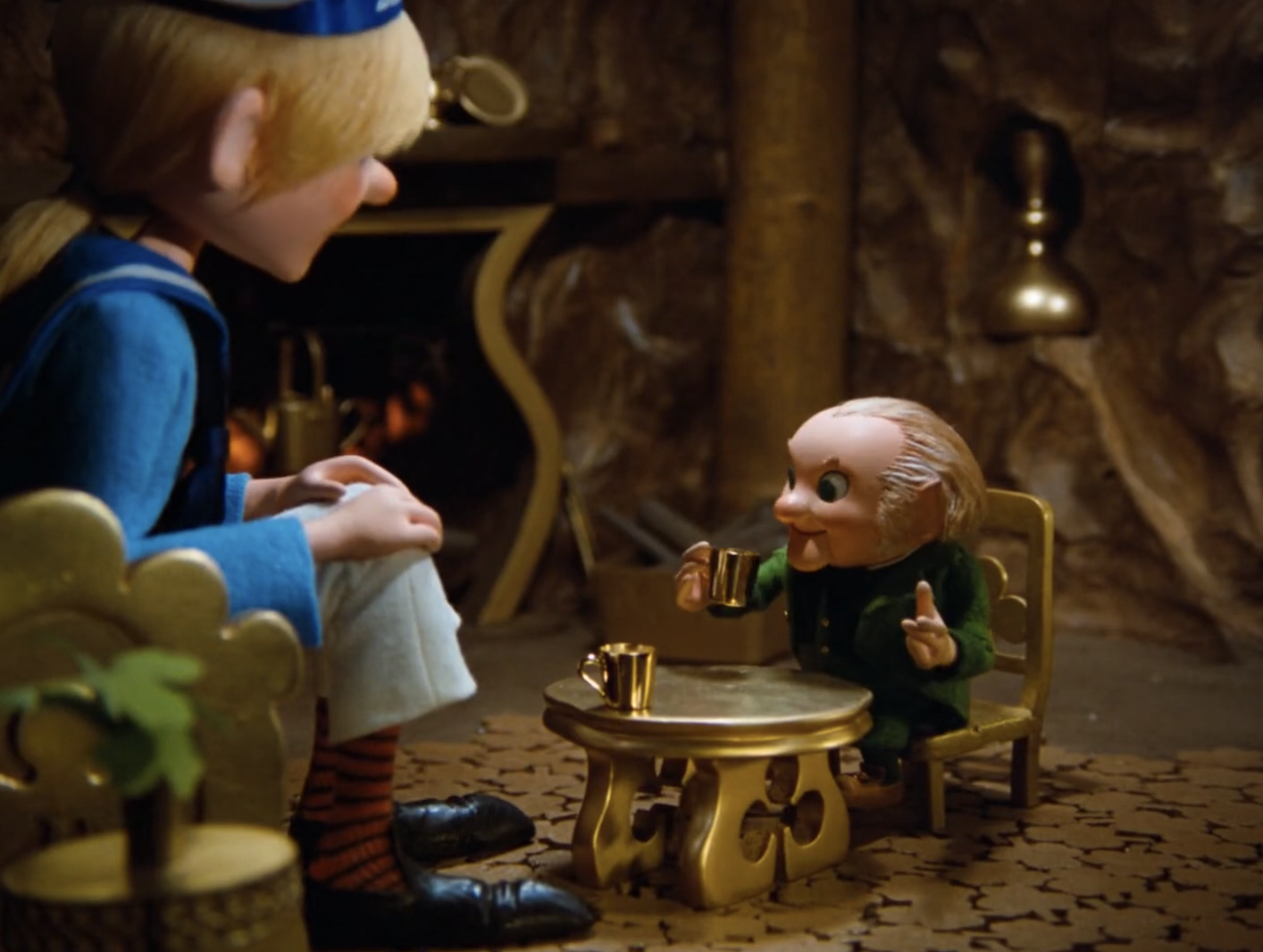
Frame from The Leprechauns’ Christmas Gold (1981). © Warner Bros. Entertainment Inc. Used for critical commentary.
Rewatching this special, I’m realizing that it was probably inspired by the song, Christmas in Killarney. And in my opinion, it wasn’t a good enough reason to force a Rankin/Bass Christmas special in Ireland that honestly, we could do without.
Our protagonist, Dinty Doyle, arrives on a remote island called “The Island of Tralee”, which inhabits the characters of Irish mythos. When he accidentally releases the menacing Banshee, Magda, and meets one of the eldest leprechauns on the island, Blarney KilaKilarney, he learns about the lives of the leprechauns—who are split between being gold miners and shoe makers—and how their island came to be. Also, he quickly discovers their hoard of gold, which he finds at the beginning of the feature (as does Magda).
This doesn’t feel like a Christmas special to me. It feels like they wedged Christmas in, by making their prized gold suddenly “Christmas gold” that Magda must have by Christmas, otherwise she turns to tears forever.
The Banshee character is made of tears, can transform into anything, and can cast spells. But really, she doesn’t do anything evil. All she wants is the gold so she doesn’t disappear, and the leprechauns won’t give it to her. The worst she does is turn gold mining leprechauns to shoe makers… oh no… (queue sarcasm).
Overall, the story is loosely woven, our main protagonists are underwhelming, and things seem to happen suddenly, with no real explanation, only to serve a plot that’s only kind of there...
15. Cricket on the Hearth (Skip)
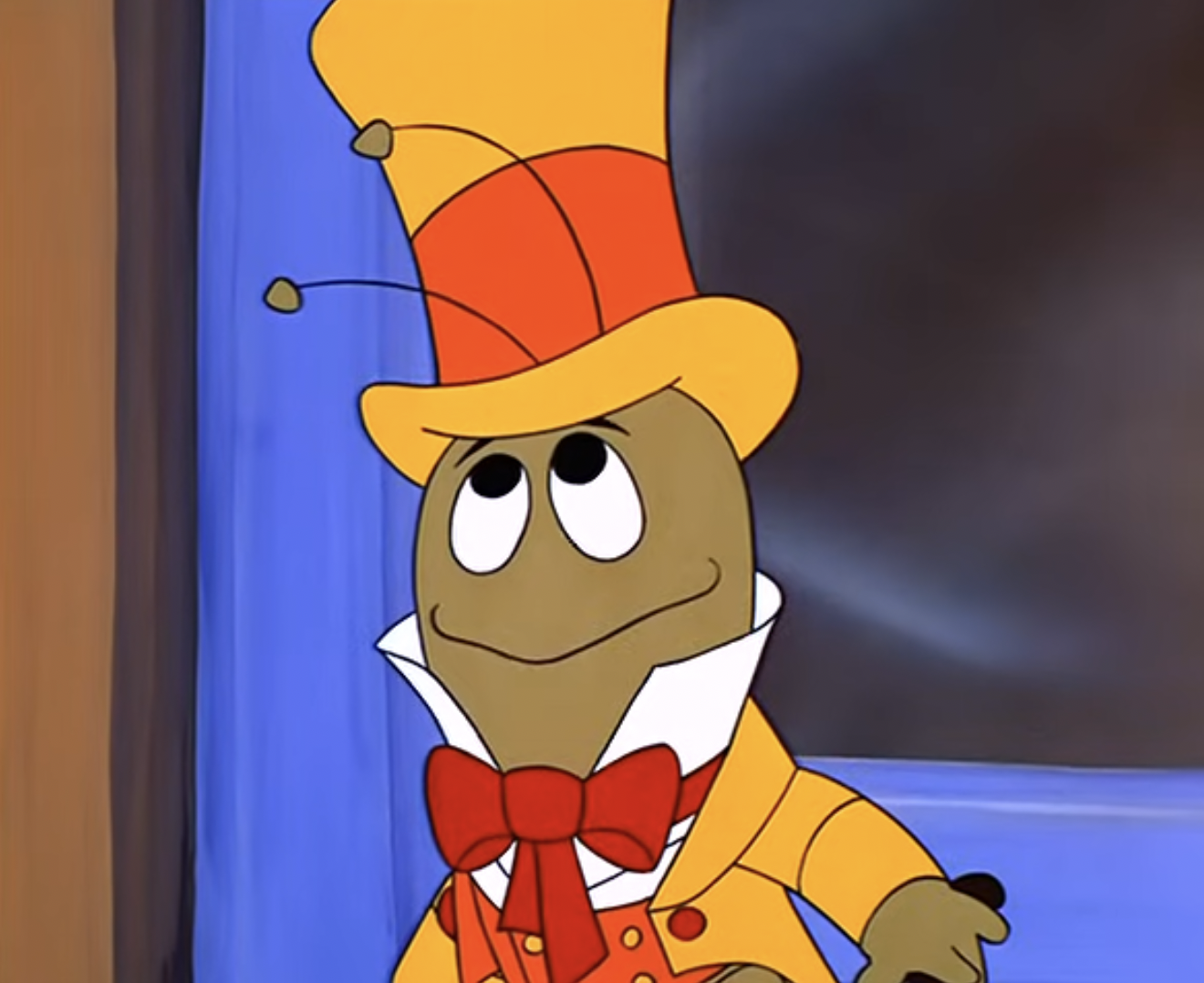
Frame from Cricket on the Hearth (1967).
© NBCUniversal. Used for critical commentary.
This special is a retelling of a Charles Dicken’s novel of the same name, which does infuse it with a degree of Christmastide. However, I could see this one being deeply uninteresting to kids, which is probably why I didn’t bother watching it until I got older.
Hollywood father/daughter duo Danny Thomas and Marlo Thomas are sweet together as they play father and daughter characters, Kaleb Plummer and Bertha Plummer. The two own a toy shop in a Dickens-esque English town. And of course, our cricket, “Cricket Crocket”, narrates about his time living and working with the family.
It’s a little foggy as to how the anthropomorphic-animal and human world intermingle, but I’m not going to dwell on that here.
After a chipper intro and a melodrama between Bertha and her love, Edward Belton, the story slows way down.
The often out of place, slow tempo songs and stagnant animation all help to make this special fall flat. Other than the fusion of random, visually-stimulating animated segments (in typical Rankin/Bass fashion) there wasn’t a lot here to keep me entertained.
I’m not going to go into the details of the plot, because it’s not important to judging this special. It’s a near 50-minute special, with the majority feeling like filler.
The core of this story deals with the trauma of lost love, sudden blindness, a father caring for his adult daughter, and an awkward love triangle. And then, suddenly, there’s magic toys that save the day.
I think Rankin/Bass bit off more than they could chew and ended up translating a (more than likely) complex Dickens tale into a two-dimensional holiday special—with little character growth, unclear stakes, unmemorable songs, and a shallow pay off in the end.
All of this said, I wouldn’t prioritize this one on your holiday list.
14. Frosty’s Winter Wonderland (Skip)
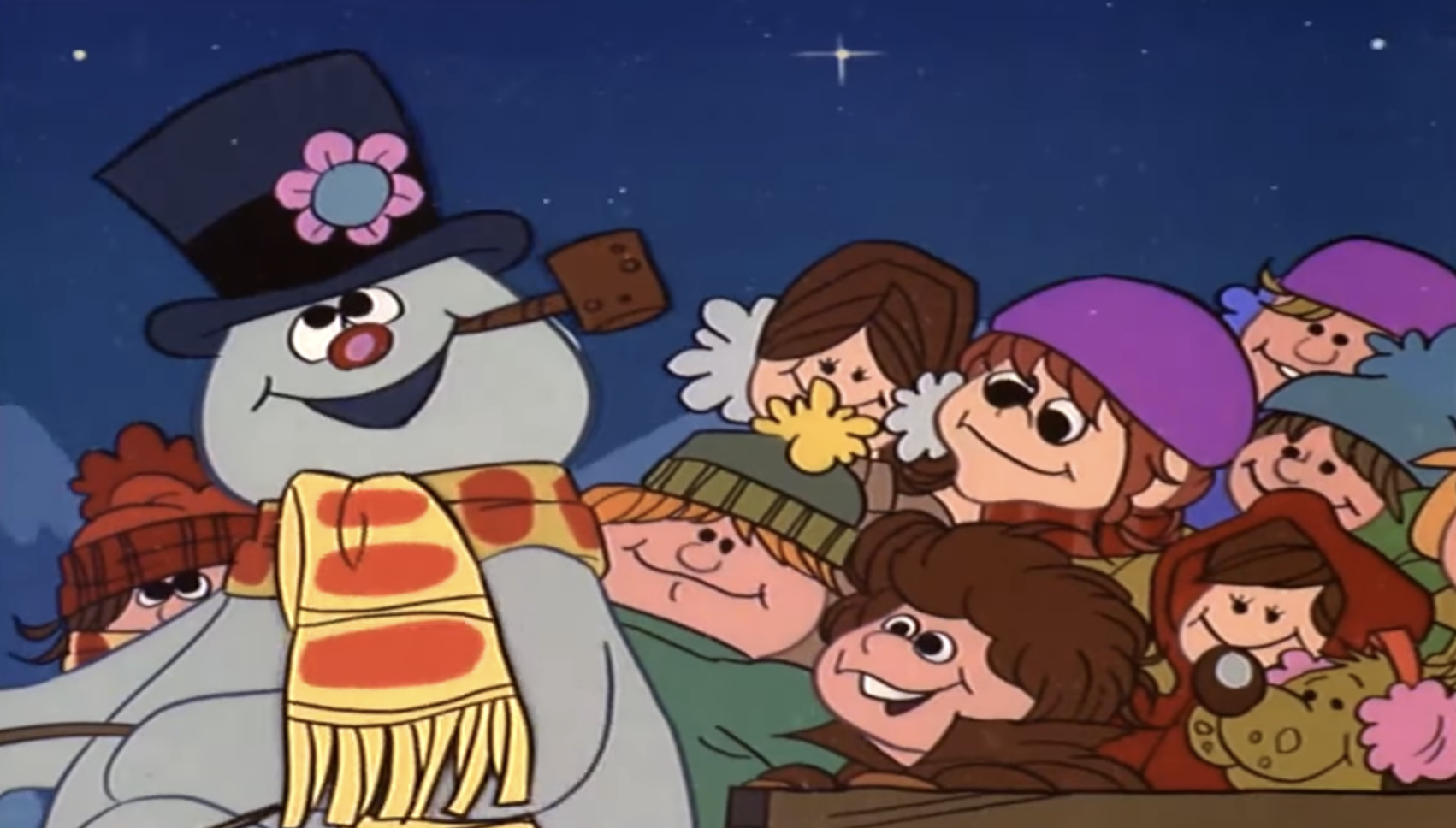
Frame from Frosty’s Winter Wonderland (1976). © Warner Bros. Entertainment Inc. Used here for critical commentary.
Compared to its original counterpart, this special falls flat in most ways possible. Other than having the upbeat charm of Andy Griffith as our narrator and Jackie Vernon’s return as Frosty the Snowman, there wasn’t a lot I loved about this one.
This story quickly forgets the ending of the original, where it was said that Frosty would return to the town every year to visit. Instead, our story begins with Frosty feeling lonely at the North Pole and missing his friends. So, how does he fix this? He gets a wife!
The kids aren’t given that charming distinction that they had in the first movie, they’re just there.
Frosty’s specialness deteriorates in this feature. Since not only does his wife, Crystal, effortlessly come to life with an ice bouquet, they also bring another “parson snowman” to life in order to marry them.
It’s also strange to have a beloved winter icon such as Jack Frost be our villain. And not only that, he’s made to be jealous and petty as he struggles in an internal battle over not being loved enough. Then, the conflict he creates is quickly brushed away with how easily Frosty and Crystal are able to outmaneuver him.
We also have a repeat of the traffic cop choking on his whistle… Once was enough.
This special feels like a story just made to have some origin story for how Frosty got a wife. This one could be a good option for young children, but not one I would recommend prioritizing in your family’s holiday watch list.

13. Rudolph and Frosty’s Christmas in July (Skip)
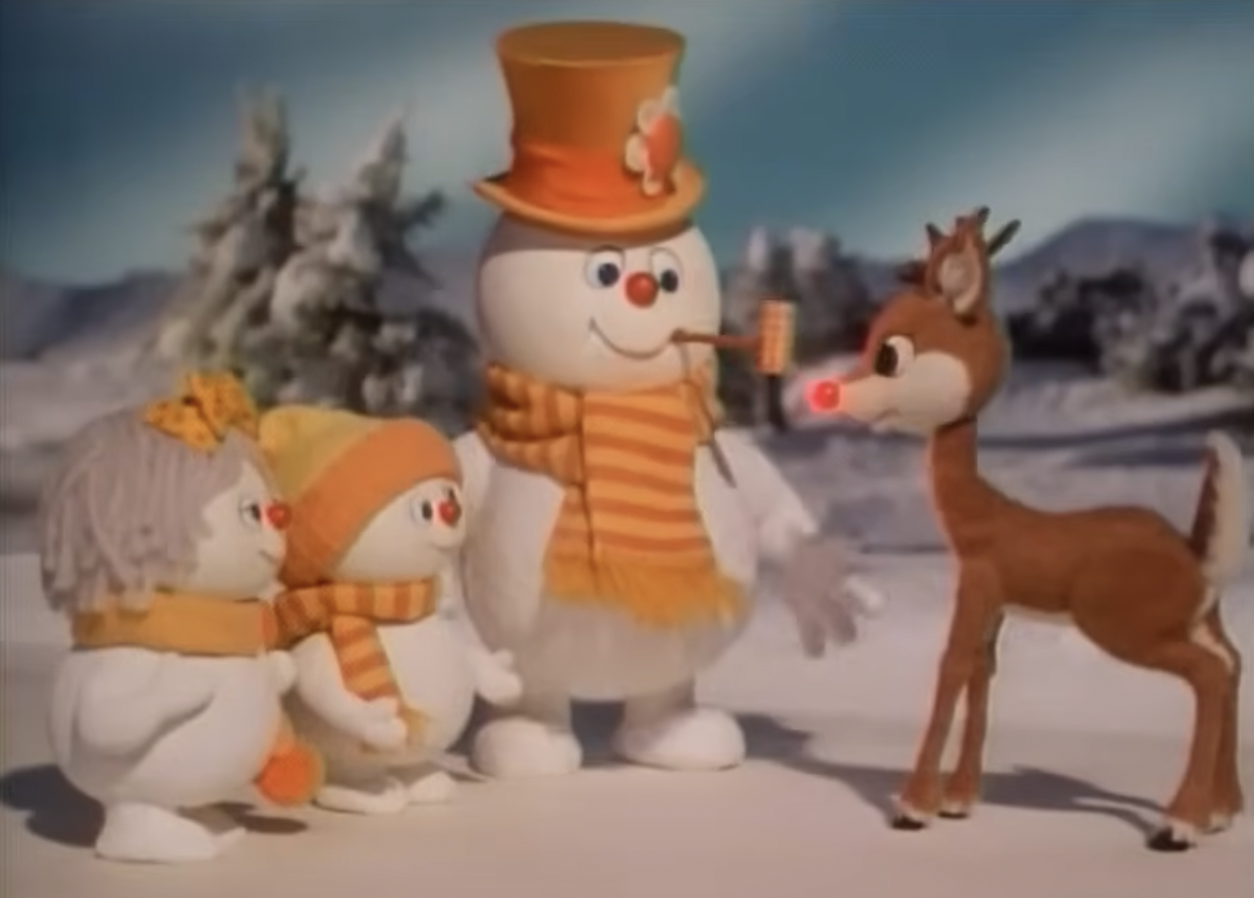
Frame from Rudolph and Frosty’s Christmas in July (1979). © 1979 Rankin/Bass Productions, Inc., under license to Warner Bros. Entertainment Inc. Used for critical commentary.
Oh boy, there’s a lot to unpack in this special. Mostly because it feels like we have multiple specials in one.
On first glance, it’s an exciting idea to have two Christmas superstars—Rudolph the Red-Nosed Reindeer and Frosty the Snowman—in a special together. But sadly, I think this was a case where there wasn’t effective follow through. It seems the writers were so excited, they said, “Why not add as many characters as we can into one story!” And that’s exactly what they did.
We have a handful of things happening, beyond Rudolph and Frosty. We are introduced to lore before Santa Claus—with villain, Winterbolt, and his adversary, a benevolent spirit, Lady Borealis, who battle each other over the North Pole. We have the history behind Lady Borealis giving the magic to Rudolph that makes his nose glow. There’s also Frosty’s history and his family.
Storyline A: After awakening from Lady Borealis’ sleep spell, Winterbolt wants to battle with Santa to control the North Pole (even though Santa is hardly aware of him from start to finish). Then, it’s about Winterbolt trying to steal Rudolph’s nose-glowing-power, then Frosty’s hat-power to regain control over the North Pole...
And I haven’t even gotten to the storyline at the circus on the seashore, which is where they end up having a “Christmas in July”. So, there’s a whole other dynamic happening at the circus with another cast of characters.
Storyline B (Circus): Ms. Lorraine and her daughter, Lainey, are trying to keep their circus alive so it doesn’t fall into the hands of sketchy businessman, Mr. Sam Spangles. And they need Rudolph and Frosty to attract customers to keep the payroll rolling. Let’s not forget the unnecessary addition of Milton the ice cream man, who’s in love with Lainey.
Sure, there’s some weaving of storylines A and B, but we are also left with songs and scenes that do nothing more than make the run time super long (it’s an almost 2 hr. long special!!)
Santa and Mrs. Claus don’t need songs.
We don’t need an appearance from Big Ben (from another special, Rudolph’s Shining New Year).
We don’t need the characters, Milton and Lainey.
We don’t need a scene to sing, Rockin’ Around the Christmas Tree.
Oh, and Jack Frost makes an appearance.
And because so much is happening, the resolution feels cheesy and rushed.
I appreciated Winterbolt as a smart, cunning, and calculating villain. The circus scenes can be very fun and vibrant. I loved the strong cast with Ethel Merman, Mickey Rooney, Jackie Vernon, Shelley Winters, and Paul Frees. But it’s all too much! I was left feeling like my head was spinning, and then left bored.
Save your time, unless this one is left on in the background.
12. First Christmas: The Story of the First Christmas Snow (Watch, for Angela Lansbury)
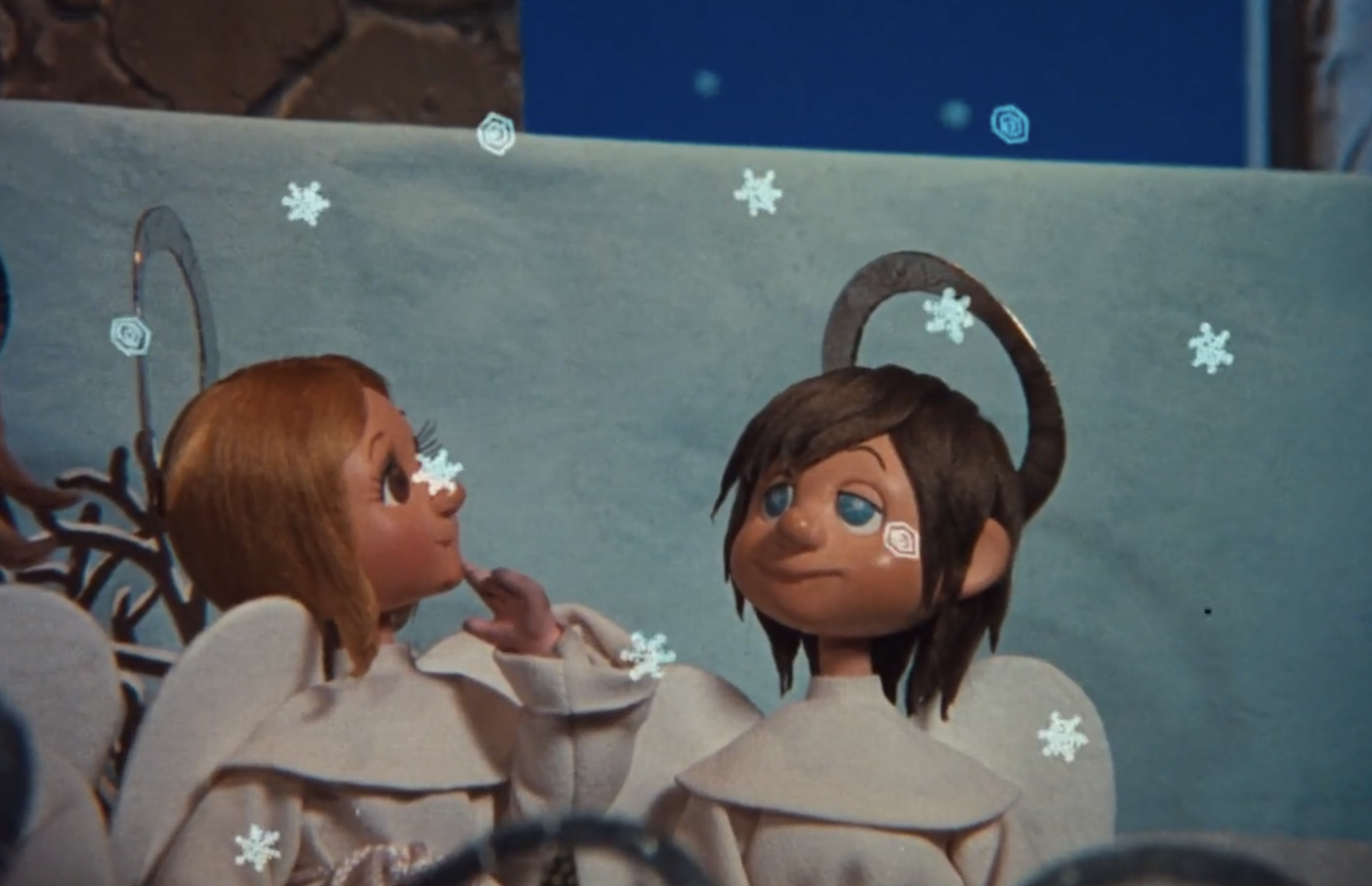
Frame from The First Christmas: The Story of the First Christmas Snow (1975). © Rankin/Bass Productions, Inc., licensed to Warner Bros. Entertainment Inc. Used for critical commentary.
I always loved this special as a kid, but never owned it. This one also seemed to be the rare Rankin/Bass viewing on TV. Watching it now, it’s not a sensational feature, but it deserves its spot on my list.
We have as children’s story that takes place in a Parish; my initial thoughts are that it’s unique. And we have Angela Lansbury in a starring voice role; an automatic win in my book!
The special pays tribute to the song, White Christmas. And for what it’s worth, I like how the song is tied into the story.
Our main characters at the Parish are three nuns, Theresa, Katherine, and Jean, who are painting Christmas cards while discussing the snowfall and how there was said to be snow during the Nativity. During which, our protagonist, a shepherd named Lucas, is caught in a sudden storm and struck by lightning. The nuns are quick to rescue him and allow him to take shelter in the Parish where it is quickly discovered that Lucas has lost his sight from the accident.
There are many little gems in this special beneath what is otherwise a story with a lack of story.
We have creative transitions and effects.
Story-wise, I appreciate how the nuns manage to handle a heavy situation with a seamless mixing of lighthearted moments. Lucas is a likable character who’s shown to be kind, caring, and resilient.
I’m not a fan of Father Thomas who is strangely insistent on taking Lucas to an orphanage.
When the other kids prank Lucas, which happens toward the end of the special, it feels forced, like there wasn’t any real conflict in this story to begin with, so they had to add something in. It also feels extra low to prank someone who has just lost their sight.
The resolution comes quickly in the form of Lucas regaining his sight to experience a Christmas snow. I don’t think Lucas needed to regain sight as a resolution. Finding peace and thriving in his new reality would have been a stronger message.
I would give this a watch just for the highlight of Angela Lansbury singing White Christmas!
Otherwise, this isn’t a special that I would prioritize.
11. The Life and Adventures of Santa Claus (Watch, if you’re a diehard Rankin/Bass fan)
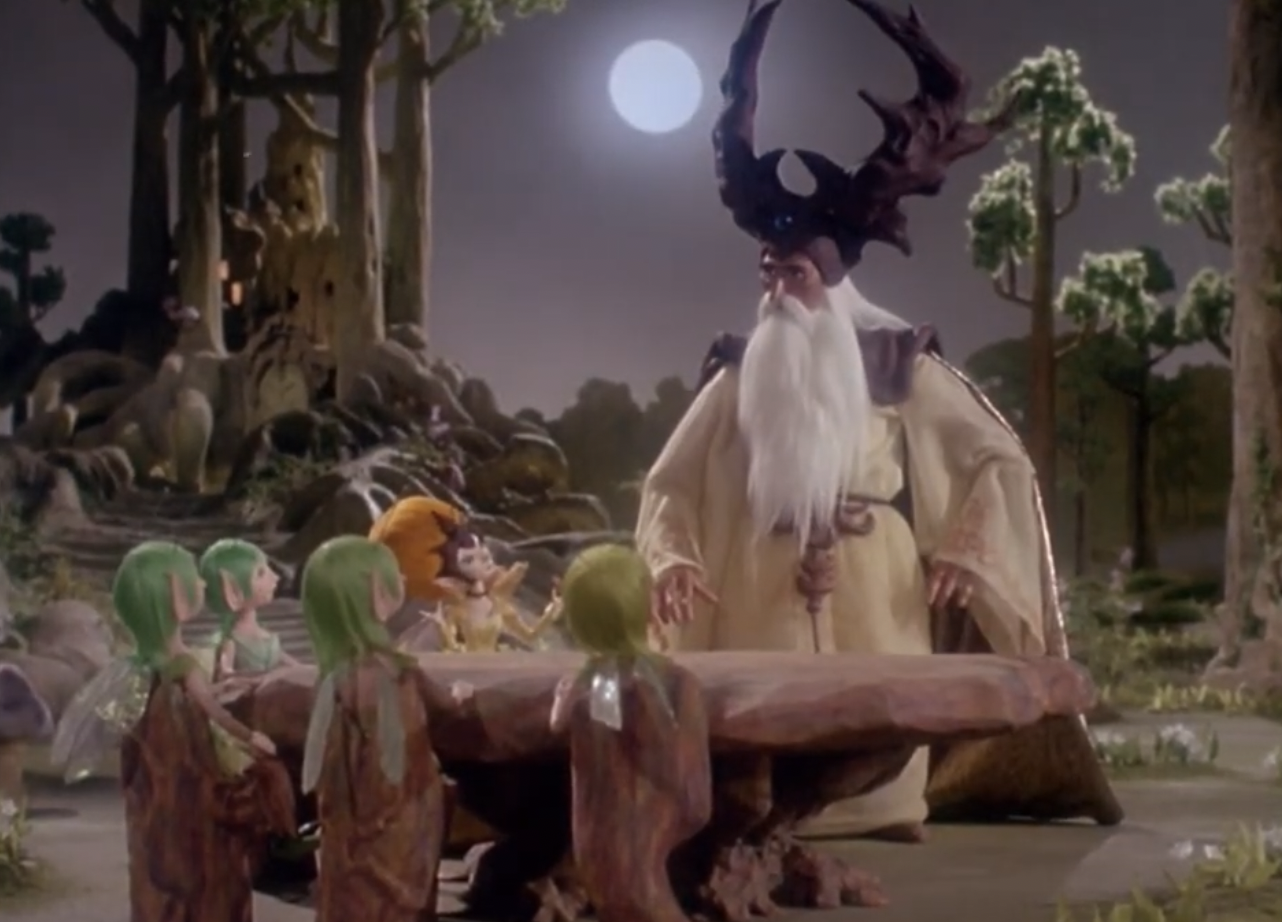
Frame from The Life and Adventures of Santa Claus (1985). © Rankin/Bass Productions, Inc., licensed to Warner Bros. Entertainment Inc. Used for critical commentary.
I think this special gets credit for its fantastical characters and storyline. It’s certainly creative for a Christmas special. The execution, however, leaves something to be desired.
We are introduced to the Great Ak, the Master Woodsman of the World, ruler of the forests. He gathers other woodland deities to make the case for giving immortality to Santa Claus. In doing so, he takes us on a retrospective trip through Santa Claus’ life—found as a babe and raised by fairies, knooks, animals, and other fairytale fare in the Forest of Burzee. All bones for an engaging fantasy story!
When Santa Claus is introduced to the human world and the realities of human suffering, he makes it his mission to give to the children. I like how we are given space to understand Santa’s motivations, and as he creates his workshop and creates his first toys, it all moves at a digestible pace.
With a story, there has to be some kind of conflict, and that comes in the form of the creatures known as the Awgwas, who compel kids to misbehave and cause chaos. They don’t like Santa giving toys to the children, cause... I don’t know, plot?
When the Awgwas refuse to stop sabotaging Santa’s toy deliveries, they start a war with the Great Ak and the other woodland company. The war lasts all of a few minutes and the Awgwas are quickly annihilated, which was rather disappointing because they were presented as pretty menacing and having powers of invisibility. Not once did they use that power in the war.
We were heading toward the end of the special at this point, so I guess the writers figured they needed to wrap things up—going back to the first storyline they introduced; whether to grant Santa Claus immortality.
All in all, this special gets a so-so review. It sets up a lot of promising exposition, but the conflict and resolution feel rushed, and therefore fell flat. The songs were boring and easily slipped from my mind the moment they ended.
I think this is a special that will feel obscure to the average viewer, but would recommend giving it a watch if you’re a fan of Rankin/Bass.
10. The Stingiest Man in Town (Watch)
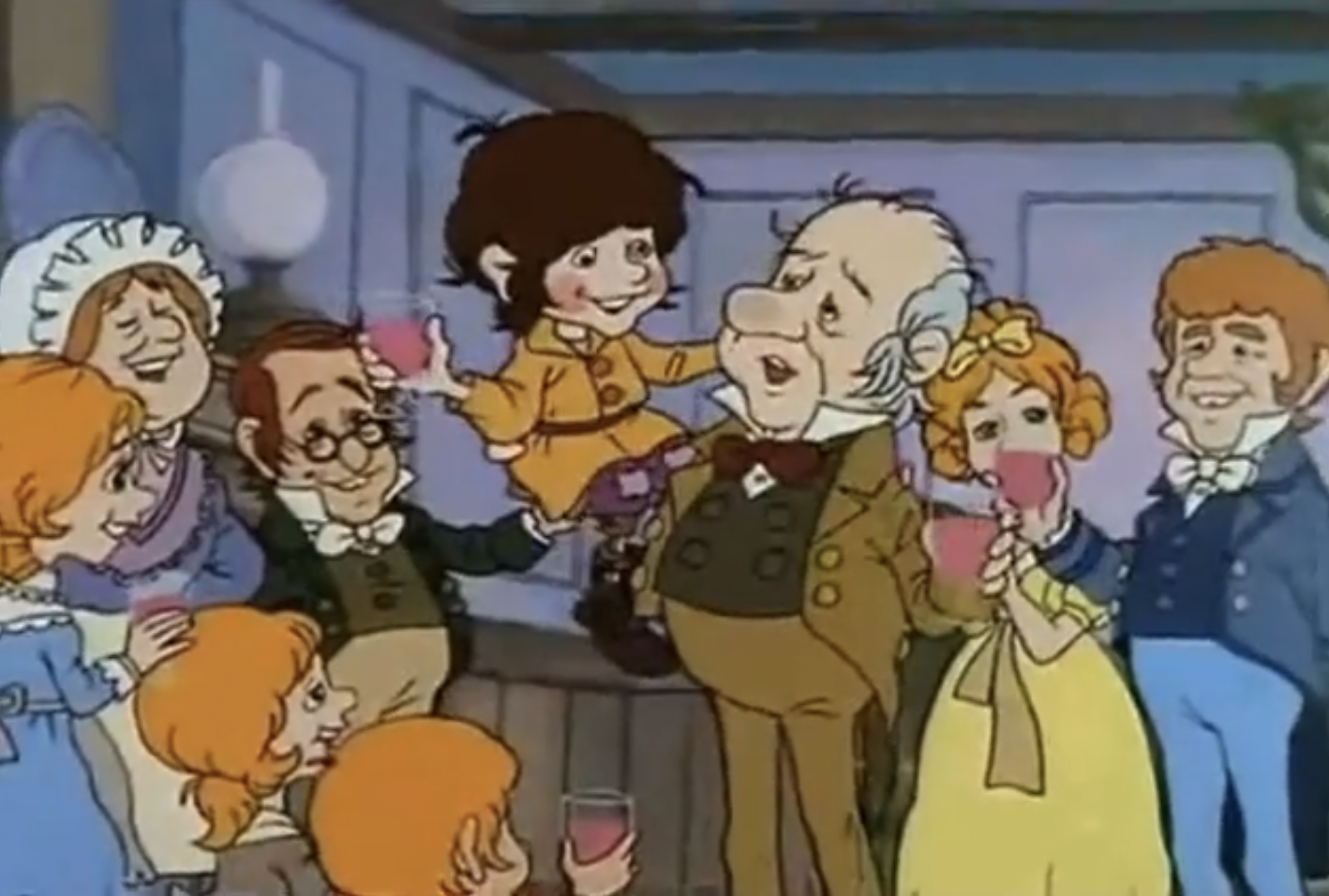
Frame from The Stingiest Man in Town (1978). © Rankin/Bass Productions, Inc., licensed to Warner Bros. Entertainment Inc. Used for critical commentary.
Watching this special for the very first time while writing this list, I was unexpectedly delighted.
After a nice opening song, we get a clever introduction from our narrator, a literal “hum-bug”. Considering this is one of many adaptations of A Christmas Carol, I thought it was a nice touch. And for a short 51 minute special, it accomplishes a lot.
During the Stingey song, we get a detailed look into Scrooge’s dynamic with the other people in the town.
Despite limited and, at times, rather static animation, we also get moments filled with imaginative scenes and ones that evoke real emotion.
The introduction to the Ghost of Christmas Present is trippy (in typical Rankin/Bass fashion) and fun. Then, there’s the dual camera where we see Scrooge and his past love both aging in sadness and isolation. And a moment where we peer into Scrooge’s deep emotional low as he feels helpless to escape the mistakes of his past.
I appreciate that we’re given time to actually experience the emotional depths and heights along with the characters, and witness them achieve real growth.
The music is cheerful and enjoyable most of the time.
I thought it was weird when they presented the Ghost of Christmas Present as Santa Claus, only to circle back to an actual Santa Claus at the end. I also thought it was strange to give a scene to the Nativity, since I’ve never seen Jesus or the Nativity shown in any other Christmas Carol story I’ve watched.
Tiny Tim’s character design was odd (no eyelids?).
But overall, an impressive special. I’d recommend giving it a watch!
9. ‘Twas the Night Before Christmas (Watch)
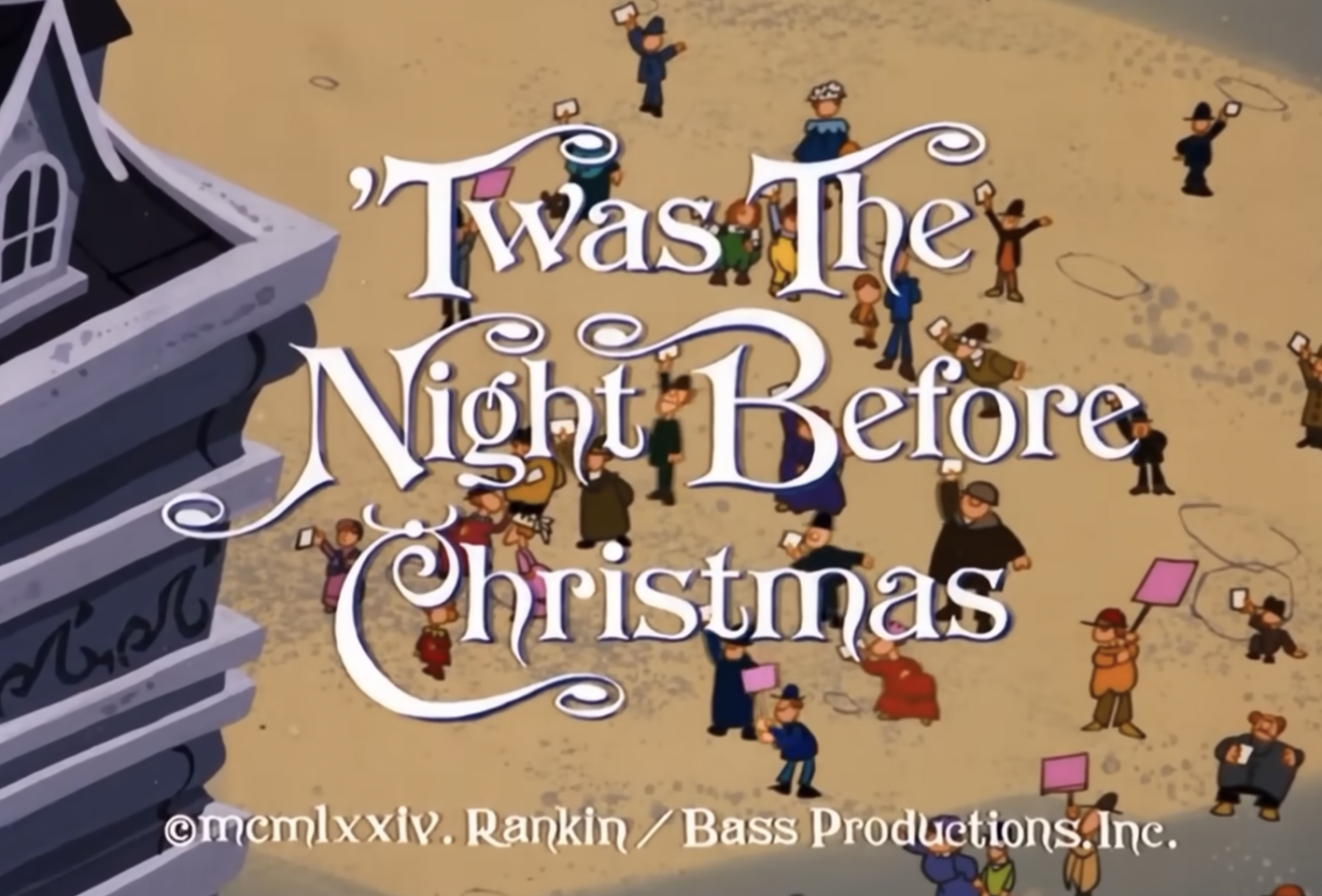
Frame from ’Twas the Night Before Christmas (1974). © Rankin/Bass Productions, Inc., licensed to Warner Bros. Entertainment Inc. Used for critical commentary.
This Rankin/Bass special was completely done in 2D animation. And I think, as far as their 2D features go, this one is filled with a lot of charm.
The backgrounds are detailed and rich with color. The voice casting was a great fit. The characters have cute designs, albeit, most of them (humans included) look like mice.
The story is meant to pay homage to Clement-Clarke Moore’s classic poem, Twas the Night Before Christmas. And I like that the special is bookended with lines from this work.
Here’s the story happening in the special between Moore’s poem:
There is random intersection between a human and mice world, who are all kind of leading parallel lives in a town called Junctionville. Not sure why it’s JUST humans and mice.
When everyone gets their letters back from Santa Claus there is a lot of confusion from the townspeople (and townsmice). It’s discovered that Santa has essentially written them off. And it’s because of a half-genius/half-know-it-all mouse named Albert who has written to Santa saying Santa Claus is a phoney and no one cares about him.
Our main human characters, the Trundle family, and their mice-family counterparts, (which Albert is a part of) are clockmakers.
When the human father, Joshua Trundle, tries to make a huge apology to Santa with a darling town clock with a darling song, Albert also fudges that up and Joshua (and his business) loses respect from everyone in town. Albert is forced to see the error of his ways and ends up saving the Trundle family from ruin and ultimately, the town’s Christmas.
As to not go too far down the rabbit hole, here are my thoughts—
I think most of the songs are memorable and hold a special place in my memory. I love Joshua Trundle as a character, with his limitless perseverance and optimism. However, the story is rushed, and it’s a lot to put the whole story’s conflict on one mice-child character who, at the end of the day, is well-meaning (Albert). But overall, I think this one is worth a watch for the kiddos in your life.
8. Nestor, The Long-Eared Christmas Donkey (Watch)
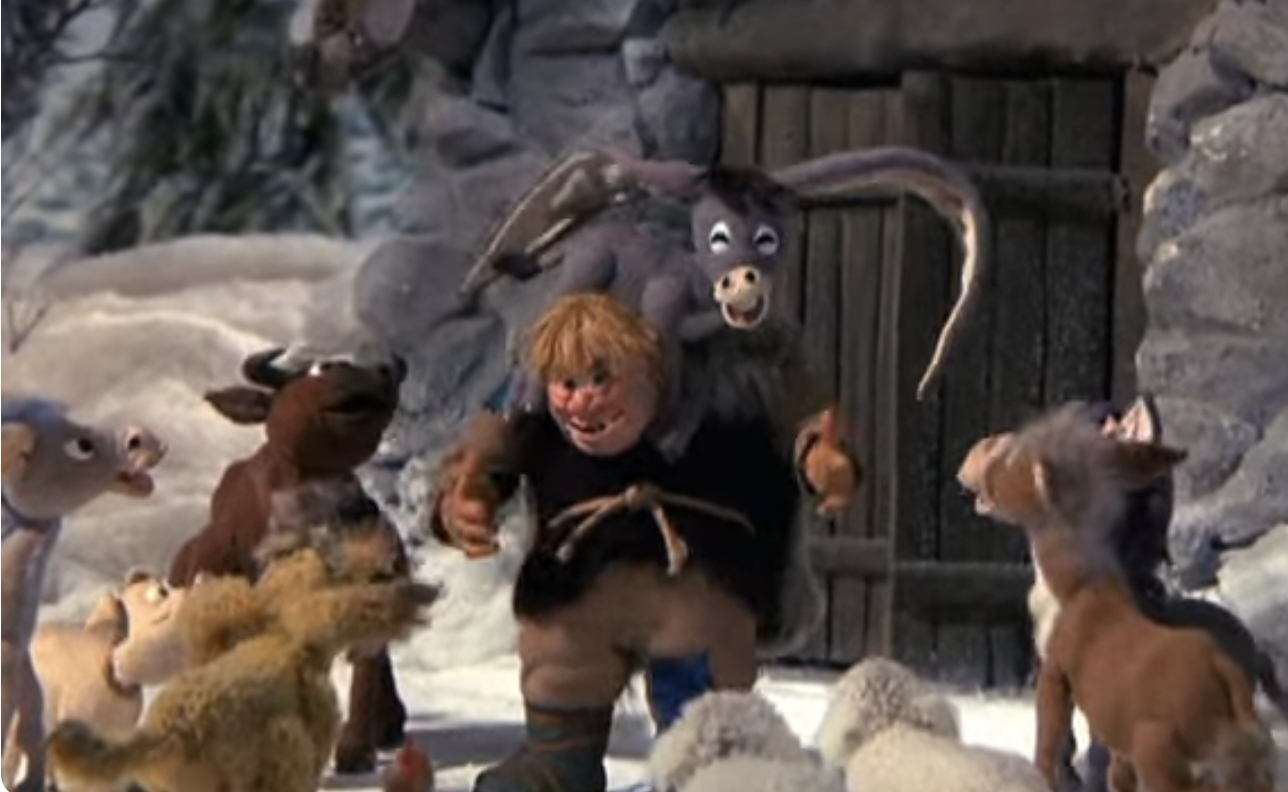
Frame from Nestor, the Long‑Eared Christmas Donkey (1977). © 1977 Rankin/Bass Productions, Inc., licensed to Warner Bros. Entertainment Inc. Used for critical commentary.
Rewatching this special, I was delighted.
This story was inspired by the song of the same name by Gene Autry. And to lead the way is Roger Miller who does a stunning job singing and narrating the feature. I also applaud the story for successfully finding a way to weave both sides of Christmas; the Nativity and Santa Claus.
We begin in Santa’s workshop where we are introduced to a donkey-narrator, a descendant of the donkey, Nestor, who is famously known for his long ears and for carrying Mary to Bethlehem on the night of Jesus’ birth.
We are taken through Nestor’s early life—a classic story trope, where Nestor is ostracized for his physical difference; that being his abnormally long ears.
We aren’t too lost in the story before we hear the original song of its namesake, and in that way, I think it was a great way to link the special with its source material. Much like what is done in Rudolph the Red-Nosed Reindeer.
There is some awkward animation in parts and at one point there’s a quirky use of a nickel that’s meant to depict a Roman coin.
The story presents heavy themes for a children’s Christmas special, including animal abuse, death, and grief.
I think there could have been more done to clean up the cherub puppet, which looks as though it’s been left for weeks in a sand box.
However, despite the negative remarks, I think this special is infused with a lot of charm, creativity, and overall solid writing, with clear conflict, big stakes, and a satisfying end.
I also love how Nestor’s ears develop multiple uses throughout his journey; as skis, a sail, and eventually as a blanket that Mary is wrapped in as Nestor holds her during a storm.
As the viewers, we are made to care about Nestor; empathizing with him and later celebrating him.
This is one I’d definitely add to your Rankin/Bass holiday watch list.
7. Rudolph’s Shiny New Year (Watch)
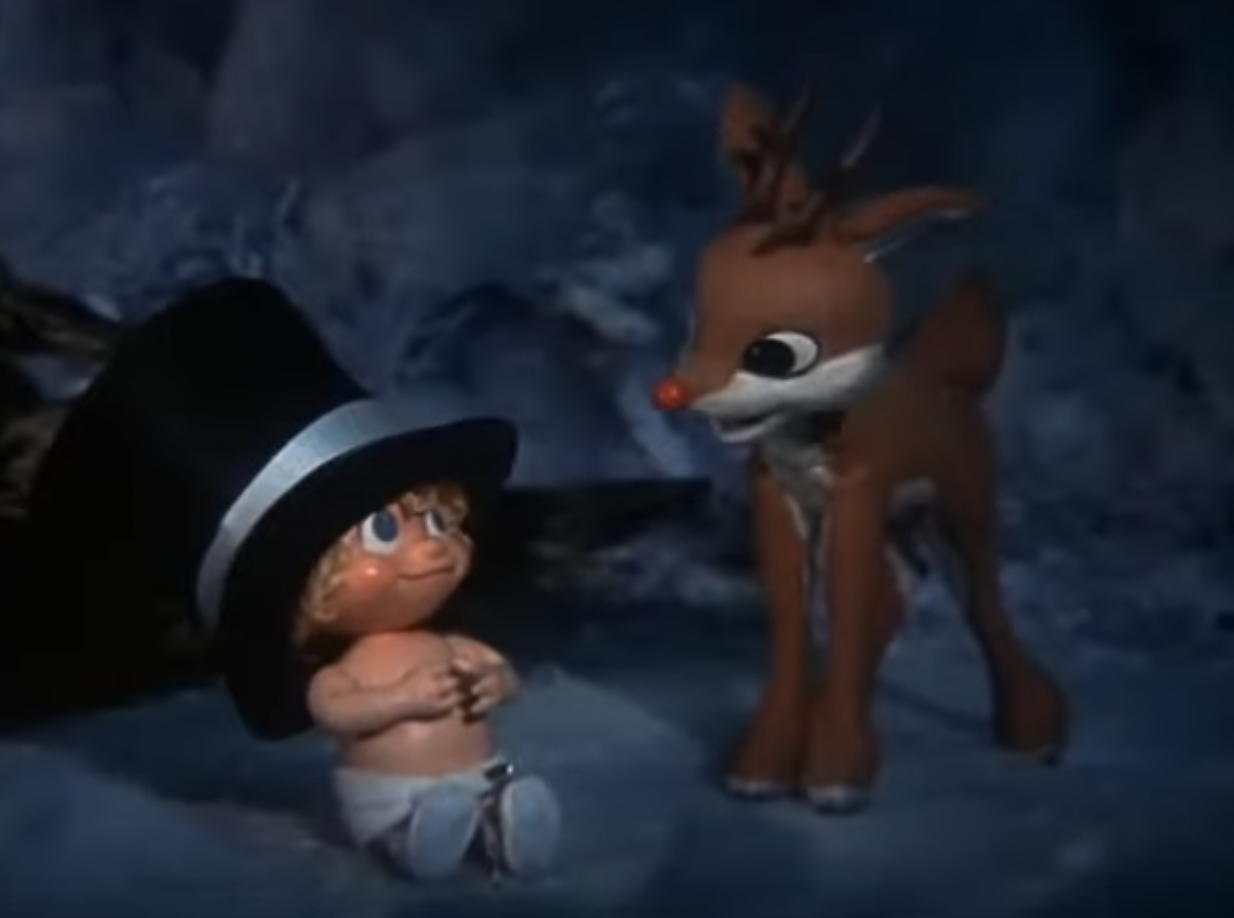
Frame from Rudolph’s Shiny New Year (1976). © Rankin/Bass Productions, Inc., licensed to Warner Bros. Entertainment Inc. Used for critical commentary.
This special, while a fun off-shoot into New Years, is nicely kept tied to the Rankin/Bass Christmas cannon.
Rudolph is back! This time he is called to help bring in the new year, when “Happy, the Baby New Year” goes missing.
Father Time (wonderfully voiced by Red Skelton) is our narrator, and thoroughly introduces us to the World of Time and the rules that bring in every New Year.
Happy, the new Baby New Year, must be in Father Winter’s tower by midnight, Dec. 31st to successfully welcome in the new year.
We have a formidable villain, Eon the Terrible, a terrifying, giant bird whose time is almost up. He raises the stakes impeccably as he aggressively hunts for Happy so that he can stop time and live forever.
Rudolph and his collected group of allies embark on a search for Happy to return him to Father Time before it’s too late.
It’s a joy as we discover the Archipelago of Last Years with Rudolph and watch him sail across the seas to discover new worlds of yesteryear.
It’s daunting to think there’s an island for every single year of the past, so understandably, the creators had to simplify that a bit to satisfy the story.
We are introduced to a familiar trope, where a character is bullied for a physical difference. And much like Nestor, the Long-Eared Christmas Donkey, Happy is teased for his abnormally large ears, which causes him to run away.
And since Happy is struggling to socialize with others due to his ears, it makes the search challenging, and in turn, convincingly propels the plot.
I still enjoy most of the music and the entertaining cast of characters. But watching it again, I question a few things. Like, why doesn’t Rudolph fly more to solve his problems? There are clear instances where things could improve if he just flies. Cause, plot?
Also, did there need to be a scene for a 4th of July parade? Probably not.
When Rudolph finally finds Happy, they bond over what makes them unique, and we have a segue into Rudolph’s backstory. This could have been a perfect opportunity to repurpose clips from the original Rudolph special, but instead we are given new a 2D segment, which is questionable.
There are also a couple of instances of subpar animation.
It was disappointing that Eon is ultimately neutralized by uncontrollable laughter. For how scary he was as a villain—how determined, cunning, and sharp—it was a letdown that he didn’t fight harder in the end.
But despite its issues, this special is entertaining, creative, and enjoyable! It puts a fun spin on the new year while also sharing in the holiday spirit of its fellow Rankin/Bass features. I’d recommend giving this a watch!
6. Jack Frost (Watch)
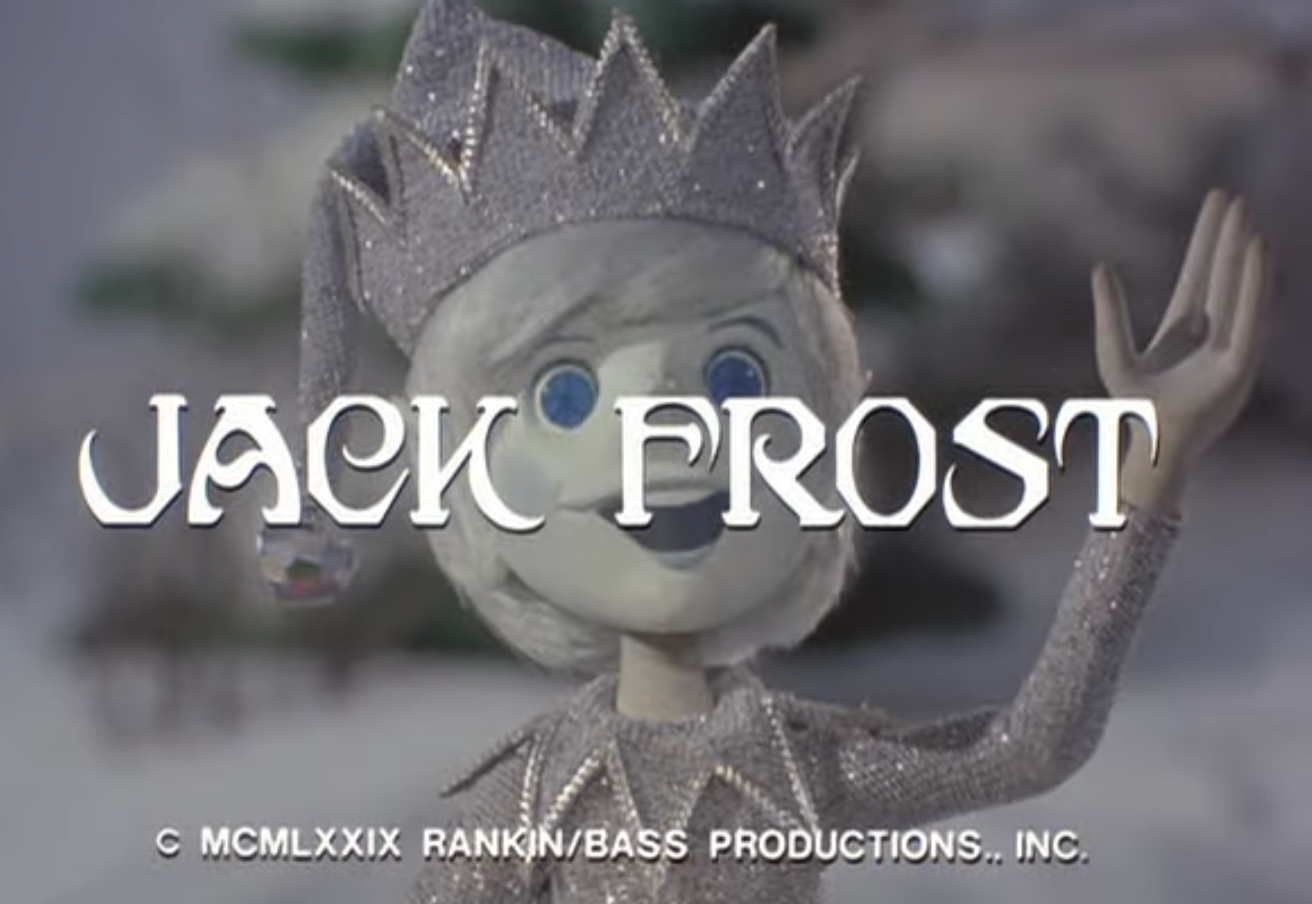
Frame from Jack Frost (1979). © Rankin/Bass Productions, Inc., licensed to Warner Bros. Entertainment Inc. Used for critical commentary.
Rankin/Bass’ Jack Frost was always a favorite of mine. A story of unrequited love + creative world-building = stole my young heart.
But for starters, I think we could have done without the tie to Groundhog’s Day and left it as purely a winter/Christmas special, because later it distracts from the main story and ultimately serves no purpose.
Our narrator is a groundhog who recalls the one time when Jack Frost became human. And because of what ultimately transpires, they make a deal every year which satisfies them both; Jack Frost gets to prolong winter in January Junction, and the groundhog gets more time to hibernate.
It’s hazy to me how they’re ever able to communicate because the groundhog makes a point to say that one cannot see or hear Jack Frost… but I digress.
We get a lot of information before the intro credits role. The main story is set in a seemingly Russian-period-inspired village called January Junction. The people here are all poor due to a “Kozak King” named Kubla Kraus who, despite not officially ruling over the area (as it’s made clear later) takes all their money in taxes…
Their saving grace is that every winter the village decides to use ice for money instead. And so, Jack Frost being the bringer of ice and snow, is hailed as nothing short of a god.
After hearing a woman, Elise, praising him and declaring her love for him, Jack Frost instantly falls in love with her. He sets out to become human to win her heart.
This story starts to sound like The Little Mermaid, which again, may explain why I loved it so much as a kid.
Watching it again, I enjoyed our look into the mystical Kingdom of the Winter Clouds; home to Jack Frost and an assortment of other winter weather sprites. Such as: The Snow Gypsies, Sleet Sisters, the Hail Fellow, Snip who hand-makes every single snowflake, and Father Winter.
When Jack Frost is allowed to become human, he has to adhere to terms, including finding a home, tons of money, and a wife, all in a matter of weeks.
Kubla Krause is an entertaining and humorous villain. While at first glance he appears two-dimensional, he is given some surprising depth with the addition of his dummy companion, Dommie, who challenges him on his confidence and abilities.
The songs continue to bring me joy (with the exception of, Just What I Always Wanted). I love the added humor as Elise’s family tries to make sense of Jack’s surprise guests, especially Holly, who is a miniature snow gypsie.
There’s another layer to this special that confronts themes of loneliness and depression, and they find appropriate ways to fit into this children’s Christmas special.
I do think the added love triangle in the second half is forced, and wasn’t necessary. We also divert back to the groundhog, and suddenly we’re in 1970s America. The special could have done away with all of that.
And while Jack Frost doesn’t get the ending he wanted; the world wouldn’t be the same without him.
I think that while there are some holes in the story, this special brings a whole lot of charm. After many years, I still enjoy this special today, and would highly recommend adding to your Rankin/Bass watchlist.
5. Frosty the Snowman (Watch)
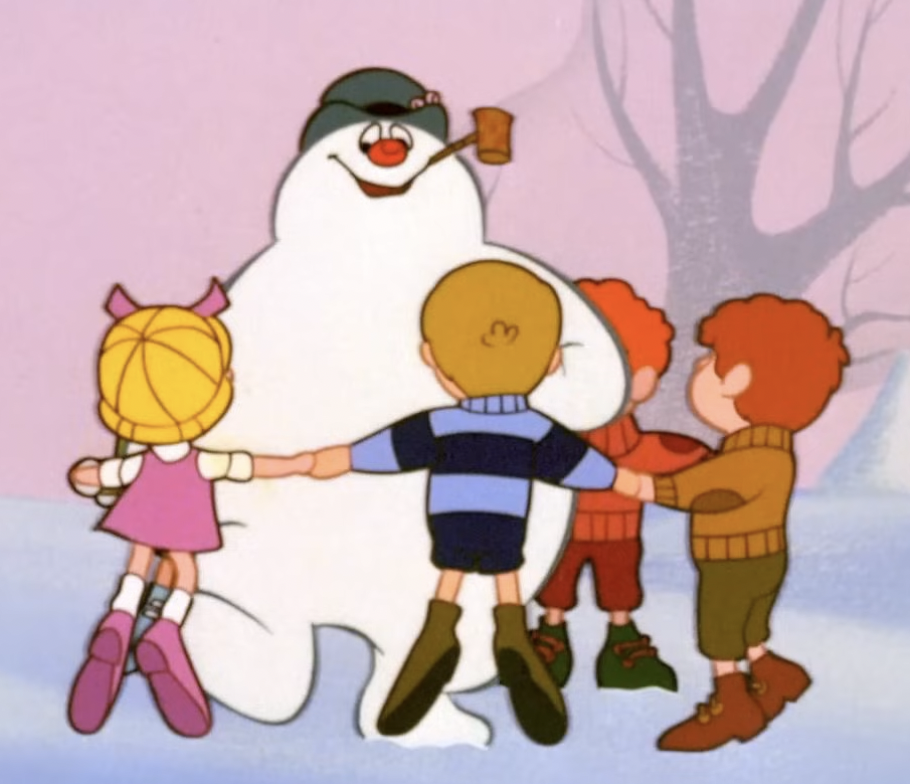
Frame from Frosty the Snowman (1969).
© NBCUniversal. Used for critical commentary.
From the beginning, with its chipper music, bright color, and whimsical animation, I remembered the nostalgic treat I was getting into.
The narration is superbly written, with great first lines from our narrator, Jimmy Durante, “I guess it all started with snow.” Then, with the line, “… the recipe for something wonderful about to happen,”.
And it accurately sets our expectations.
If you know the song, then you know the story of Frosty the Snowman. This special is very loyal to its source material.
What was creative and unusual about this special was how the creators decided to manifest conflict out of the original story, and how dedicated they would be on raising & confronting stakes.
Professor Hinkle is a unique villain; a magician. After his failed attempts at scripted magic tricks in front of a class of kids (accompanied by humorous spring-like sound effects) he throws in his hat—literally—and decides to give up on magic forever.
As the school children play in the snow, they build Frosty. When Professor Hinkle’s hat becomes the vehicle that brings Frosty to life, the conflict is set. Hinkle wants his hat to become a rich and successful magician, and the kids want the hat to keep their friend alive. And on top of that, it’s getting warmer; the snow is melting, and Frosty needs to get to the North Pole.
Between the lovable scenes, the humor, and the hilarious/well-timed use of sound effects, this special was an enjoyable watch.
Even though there’s one child in particular that we grow to know, Karen, I appreciated that the kids as a whole have distinct character, and they collectively take action to keep the story moving forward.
I also love Hocus Pocus, the white rabbit who starred in Professor Hinkle’s failed magic tricks. His dynamic with the magician is entertaining. And later on, as we see him communicating with forest animals (and Santa) in a hilarious charade act, it makes me love him even more.
When Frosty and the children march through town, the townspeople react appropriately on seeing a live snowman.
The conflict that continues to build all feels like a natural progression of the story. At one point, Frosty actually melts at the hands of Professor Hinkle—confronting real stakes!
The one gripe I had was that the ending had too quick a resolution. Hinkle forfeits his efforts in response to never having presents from Santa again. But at the heart of this, it’s a children’s special, and for that, I’ll let it go.
For a short and sweet children’s Christmas feature, this special provides a lot of entertainment. Definitely a cherished classic to add to your watch list.
4. The Year Without a Santa Claus (Watch)
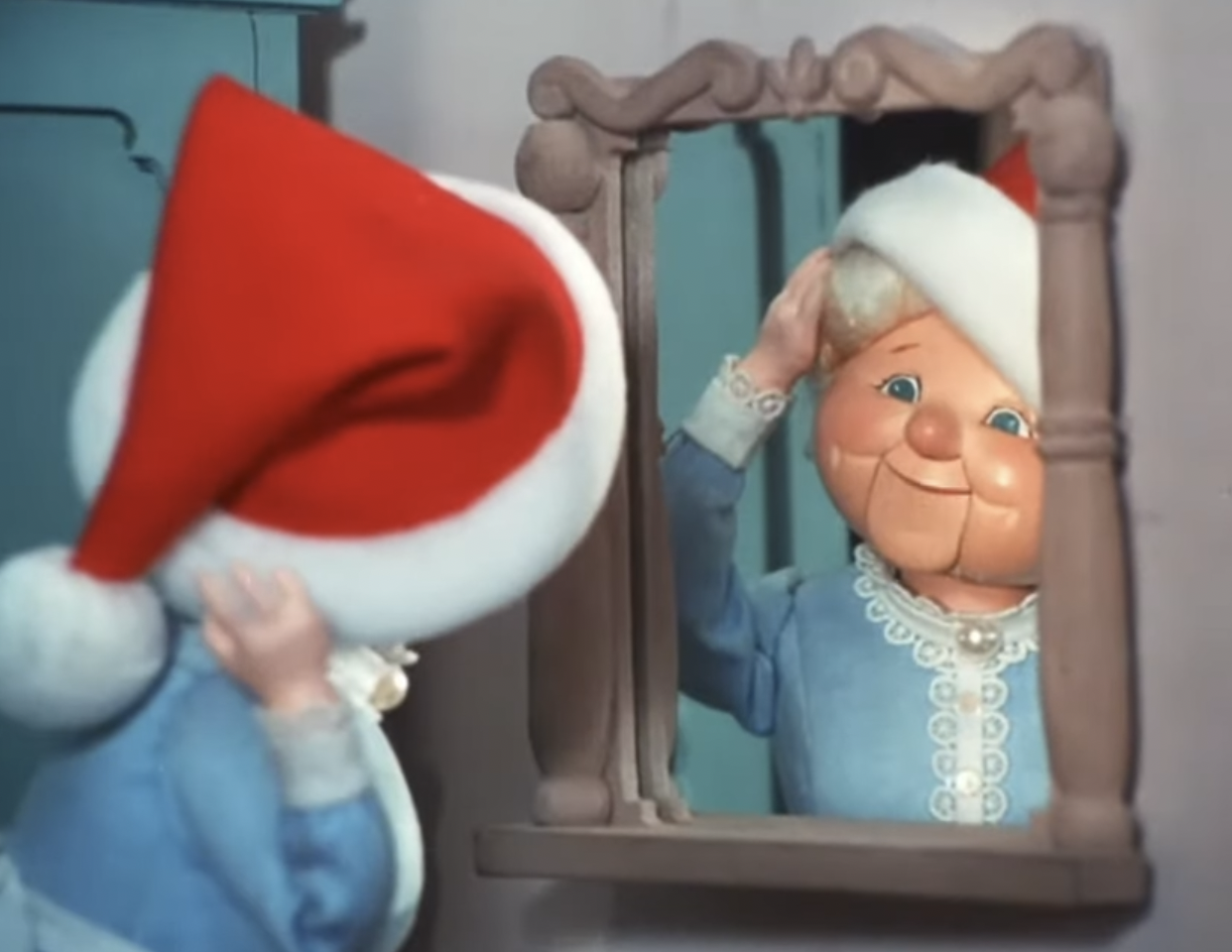
Frame from The Year Without a Santa Claus (1974). © Warner Bros. Entertainment Inc. Used for critical commentary.
This special has been one of my favorites for years, and now I can finally put into words exactly why.
From the beginning, there is an upbeat charm. We are taken to the North Pole, and Mrs. Claus recalls the year without a Santa Claus. Feeling as though kids don’t care about him, need him, or even believe in him anymore, Santa decides to go on holiday.
The theme song, The Year Without a Santa Claus, is memorable and enjoyable.
Mickey Rooney makes a reprise as Santa and does another spectacular job in the role.
Aside from Mrs. Claus are the characters, Jingle and Jangle, goofball elves who aid her in going to the human world to challenge Santa’s belief. I love that Mrs. Claus takes command here; throughout the special, we see the kind of agency from Mrs. Claus that we haven’t seen since Santa Claus is Comin’ to Town, and it’s great. Shirley Booth voices Mrs. Claus, and between her and Mickey Rooney, they have great rapport as the Clauses.
Of course, at the convenience of Rankin/Bass storytelling, we focus on one destination in the human world: South Town. Here, we meet a kid, Iggy, who has stopped believing in Santa Claus. However, he quickly has a change of heart with that emotional song, I Believe in Santa Claus, and decides to help Mrs. Claus, Jingle, and Jangle spur belief in South Town.
South Town’s Mayor with his light-hearted swagger is hilarious as he is left mystified, doubtful, and downright amused by the stories he gets from Jingle, Jangle, and the rest; it’s an all-around entertaining scene between all involved. His ultimatum to bring snow to South Town in order to stoke belief is the right set up for the conflict that comes next.
Don’t think I forgot the Miser Brothers! They’re easily the best and most memorable thing about this special. They are filled with character, charm, and charisma. The songs that introduce Snow Miser and Heat Miser are some of the most iconic in the Rankin/Bass collective, and arguably, some of the most entertaining.
After a heated and icy back and forth in their battle for snow over South Town, Mrs. Claus brings their squabble to Mother Nature. And it only gets more humorous from there. Just *chef’s kiss* good.
I don’t have many negative things to say about this special, except that we could have done without the Blue Christmas scene. But at the same time, it does help to move the story forward as it helps Santa to realize that kids do in fact love and need him, and that he needs to return.
In a way, this story is kind of pasted together, with no traditional story arc, no villain, and with an ending that feels anti-climactic and smooshed together. But nevertheless, I found many reasons to stay engaged.
If you enjoy Rankin/Bass specials, definitely watch add this one to your watch list!
3. The Little Drummer Boy (Watch)
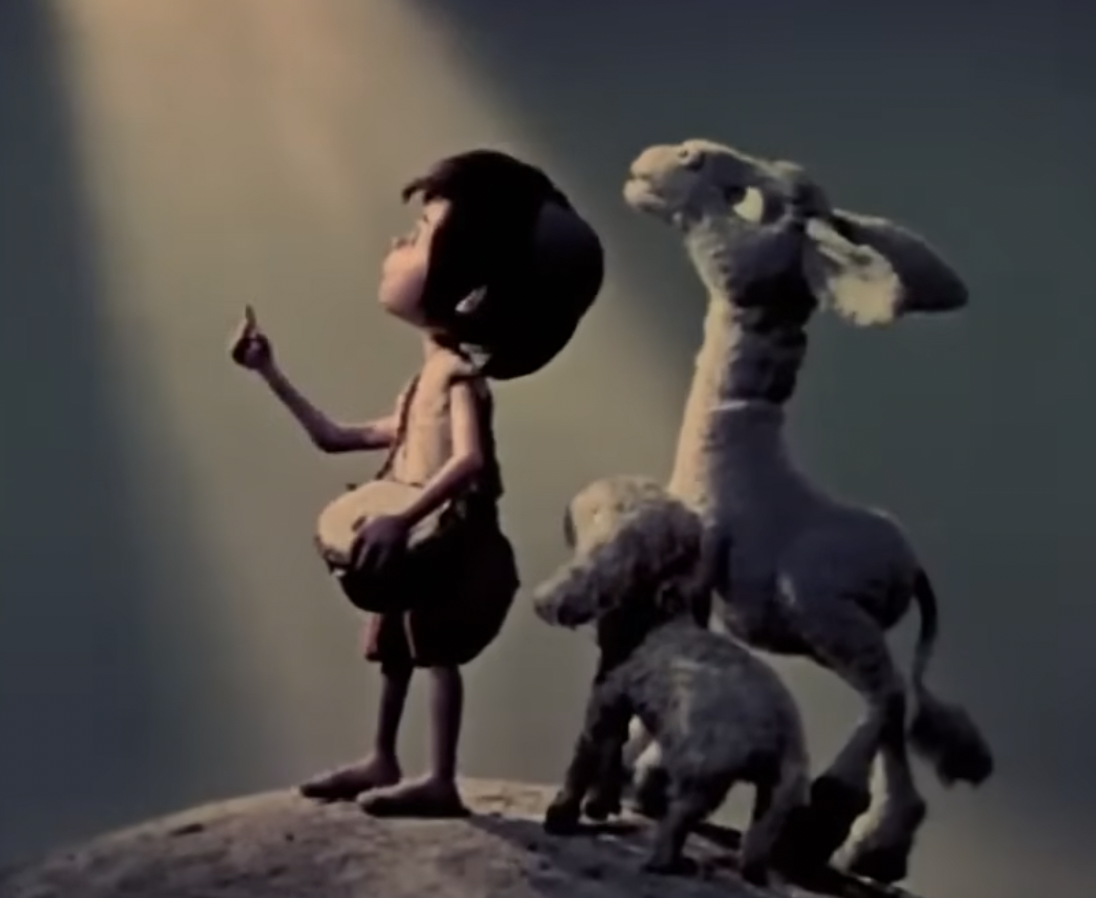
Frame from The Little Drummer Boy (1968).
© NBCUniversal. Used for critical commentary.
This special holds a firm place in my childhood. It was one of three I religiously watched on VHS every year. This special is unique in that it is one of the few that follows a biblical take on Christmas.
Today, I can say that I still enjoy its story, its characters, and its songs! When the Goose is Hanging High and Why Can’t the Animals Smile are bops. I don’t care what anyone says. Paired with the more traditional songs of One Star in the Night and The Little Drummer Boy performed by The Vienna Boys’ Choir, it all somehow works.
This special could have easily had tonal issues, but the overarching source material is treated with enough seriousness that it makes all elements play nice together.
Hollywood icon, Greer Garson, narrates as we follow a boy named Aaron. He has decided he hates all humans after his home is attacked by bandits who proceed to murder his parents. Yes, as a reminder, this is indeed a children’s special.
Aaron, now an orphan, has taken to living life in isolation with his three animal companions, a camel, Joshua, a donkey, Samson, and a lamb, Baba. He plays his drum and performs with his companions as they travel through the desert.
Their troupe catches the eye of the greedy Ben Haramed and his goofy accomplice Ali, who continuously exploit Aaron’s musical talents for money.
Things are brought to a boil for Aaron after he is once again forced to play music against his will, this time (little does he know) for the Three Kings that will become the Magi of the Nativity scene.
This is where our story begins to align with the Nativity, and I think this convergence comes together in a natural way that doesn’t feel forced.
When Joshua is sold to the Kings, Aaron follows them to Bethlehem where he must once again confront losing someone he loves. But this time, rather than deflecting in anger, Aaron decides to surrender to forces beyond his control. We are able to observe real growth in him as he ultimately finds peace in his heart.
This is a deep and tender Christmas special, and one I must say, holds respect for its intended young audience. Paul Frees makes voice appearances in multiple roles throughout the special which adds another layer of excellence! I would definitely keep this as a mainstay in your family’s holiday watch list.
2. Santa Claus is Comin’ to Town (Watch)
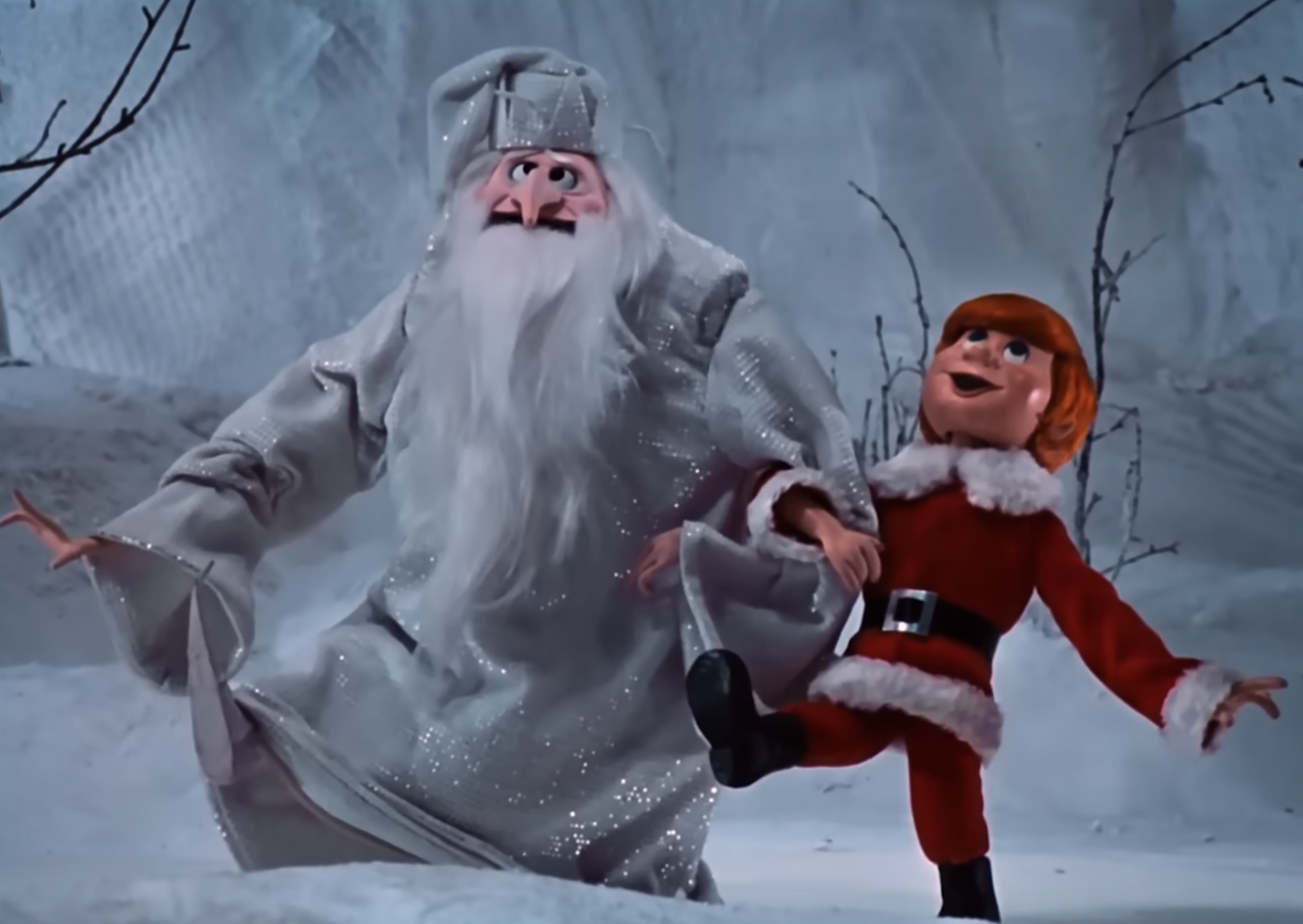
Frame from Santa Claus Is Comin’ to Town (1970). © NBCUniversal. Used for critical commentary.
When I was thinking of what special was going to make my number 1, it was a close race between this one and Rudolph. I absolutely love this special and don’t have much bad to say about it.
What won me over to Rudolph in the end was the undeniably iconic setting, characters, story, and songs that Rudolph has. But these are things this classic has as well!
From the hilarious antics of town Mayor, Burgermeister Meisterburger, to the endearing Winter Warlock and the creative take on how Santa came to be; it is all dripping with charm!
The songs are incredibly memorable. Santa Claus is Comin’ to Town, The First Toymaker to the King, My World is Beginning Today...
The jubilant energy of Kris Kringle/Santa Claus is perfectly voiced by Mickey Rooney.
Tanta Kringle and the toymaking elves are so sweet, and a simple segue into why Santa wears his red and white suit. I also love how we are given a simple, yet perfect explanation of why Santa makes his “HoHoHo” laugh.
I love how Mrs. Claus a.k.a. Jessica is given agency in this special and actively helps Kris fulfill his mission of bringing the elves’ overstocked toys to the children of their town, appropriately named, Sombertown.
While the conflict is ridiculous, it works. When Burgermeister, Meisterburger (voiced by Paul Frees) injures himself one too many times stepping on toys, he bans them outright. And bans children from having any kind of fun; a great landscape for Santa to make the right kind of havoc.
I like the artistic choices the creators made with dressing Sombertown in grays and blacks, while keeping Kris, Jessica, and the toys in color.
I love the arc of the Winter Warlock, who goes from being a crotchety menace in the forest to a companion to Kris. His magic makes much of the Santa lore come to life. Also, Put One Foot in Front of the Other is one of the best songs/scenes in this special and in the entire Rankin/Bass cannon.
The *cough* colorful 2D segment with Jessica is something I had loved since I was a kid. It’s so out there, so 60s, and oh-so-entertaining.
This is a hot take, but perhaps the special could have done without Topper the penguin? It feels as though he’s really only there for plot convenience when something else needs to happen to move things forward. Otherwise, the only thing he brings to the action is making repeated honking and gulping sounds, which I’ve always found annoying.
The story is nicely tucked into a neat arc. I never felt lost or confused by actions that are made, or by character motivations, it’s all pieced together well. And the narration was performed wonderfully by Fred Astaire, who even gets a puppet narrator in his likeness who sings and dances much like the actor had himself.
We had dynamic creative leadership for this special that consisted of no less than Arthur Rankin Jr., Jules Bass, Maury Laws on music, and Romeo Muller on story. And it all shows. They created an excellent special that has remained a beloved childhood Christmas classic. This is most definitely a watch.
1. Rudolph the Red-Nosed Reindeer (Watch)
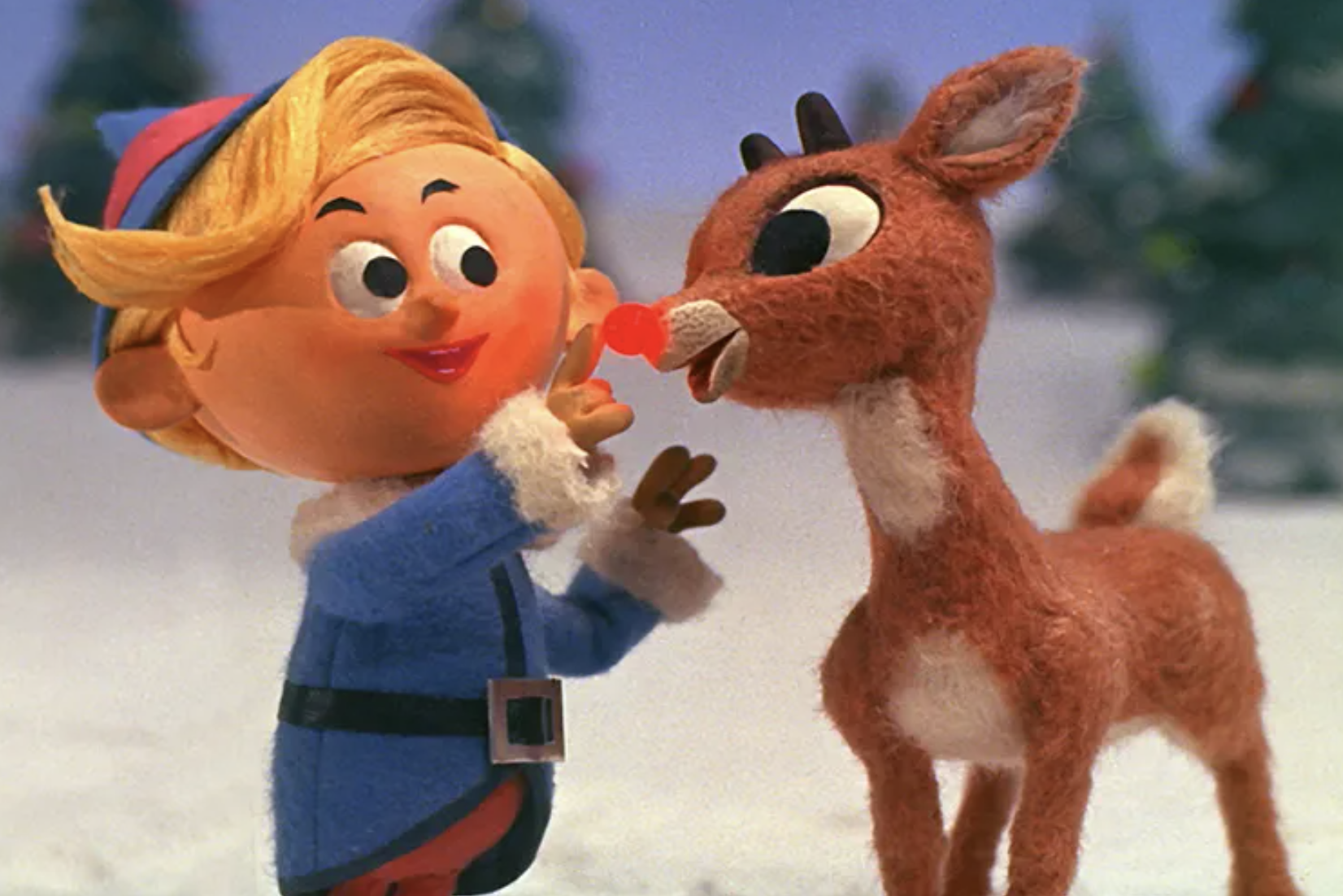
Frame from Rudolph the Red-Nosed Reindeer (1964). © NBCUniversal. Used for critical commentary.
My goodness, here we are, at (in my humble opinion) the pinnacle of Rankin/Bass Productions.
Rudolph the Red-Nosed Reindeer was the very first holiday animagic special they produced, and it was due to all the unique, quirky charisma of this special that has helped it stand the test of time (and circle back into 2020s Christmas culture).
True to its name, we follow the story of Rudolph from birth to fame as he navigates life at the North Pole with his shiny red nose.
Okay, getting the one negative out of the way...
If I had to say anything negative about this special, it would be about Santa. The Santa Claus of this special is hyper-critical and lacks warmth through the majority of the story. Immediately on meeting Rudolph he does a little song and dance about how great it is to be Santa and be a part of his reindeer crew, but then on seeing Rudolph’s nose, he immediately writes him off from ever pulling his sleigh. Cold, sir... Cold.
Shortly thereafter, we are introduced to the elves at the North Pole. Hermie is our next “misfit” as they fondly refer to themselves throughout the special. Rather than making toys, Hermie’s dream lies in dentistry. After being ostracized from another aggressive character, “Head Elf”, for not attending elf [choir] practice, he runs away. I don’t blame him.
Since right after, the elves put on a performance for Santa that they’ve all worked so hard on. Santa sits there with (from what the viewer can gather) an exasperated look on his face, and all he says once it’s done is, “Needs work”. Again, cold, sir.
Now onto the glowing review!
From the sets to characters, the designs for this special hit the right beat of bright, vivacious holiday charm. The art design and color scheme are on point, and later on became the building blocks for the entire branding of Rankin/Bass Productions.
The costuming for the elves are quintessential holiday, and were inspiration for the elf costume designs in 2004’s Elf.
The character designs, while limiting given its 1964 production, are memorable and in many ways, iconic.
Yukon Cornelius. Need I say more?
The music is the most delightful soundtrack we get from Rankin/Bass, led by the extraordinary talents of Burl Ives. Not only does Ives narrate the special, we get Ives’ vocals on numerous tracks including Rudolph the Red-Nosed Reindeer, Silver and Gold, and Holly Jolly Christmas. And then we have the tracks that meet the perfect balance of goofy and endearing, We’re a Couple of Misfits and There’s Always Tomorrow.
There is also an impressive amount of world-building, we have detailed settings for the North Pole, Santa’s Workshop, the Bumble wilderness, and the Island of Misfit Toys. In nearly every set, animals experience independent movement and set details are all given attention to the point that nothing feels repetitive or generic.
This cast of characters is one of the most distinct in the franchise, which is why figurine sets can swiftly become collector’s items. Most people that have an affinity for this special also tend to have a favorite character.
You can tell that this special was a work of love. It shows in every tendril of its production.
We have Arthur Rankin Jr. and Jules Bass producing (of course), Romeo Muller on story, Maury Laws on music orchestration, and with songwriting by none other than Johnny Marks who wrote Rudolph the Red-Nosed Reindeer and Holly Jolly Christmas.
I’m not going to make this post any longer with a tired explanation of the plot. It’s great for what it is. And I think, if you have any curiosity for Rankin/Bass and have not watched their specials, THIS ONE is THE ONE to watch!
—-
If you’ve made it this far, thank you. I hope you get something out of this list for your own holiday viewing.
Rankin/Bass inspired young-me in many ways and I think their work was one of the reasons I became a children’s author.
May your season be filled with the brightness and charm of a Rankin/Bass Christmas special. 🎄✨